 EN
EN


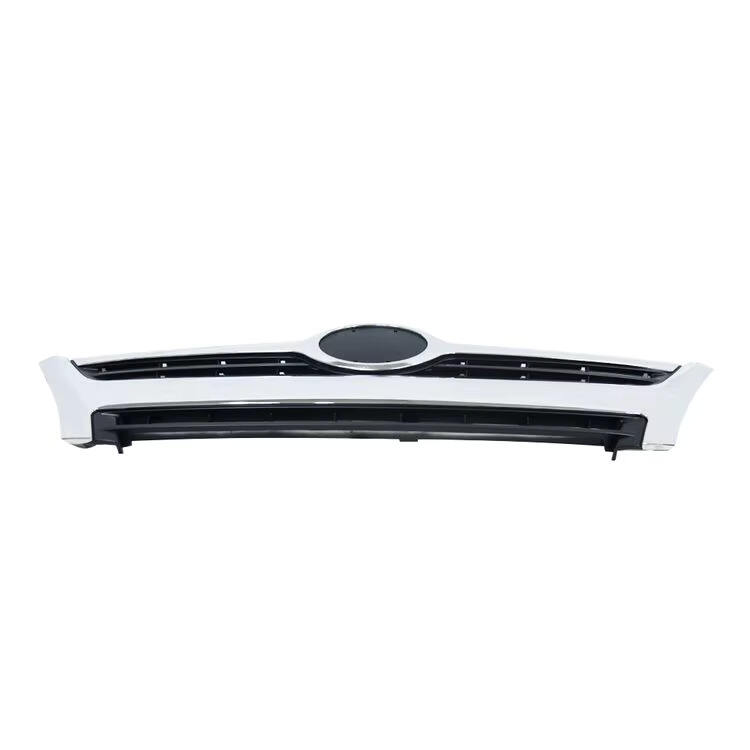
Mitsubishi Fuso trucks operate in demanding commercial environments where durability directly impacts operational costs and vehicle longevity. The choice of bumper material significantly affects how well these vehicles withstand daily wear, collision impacts, and environmental stresses. Aluminum truck bumpers have emerged as a superior solution for Fuso operators seeking maximum durability combined with weight efficiency and corrosion resistance.
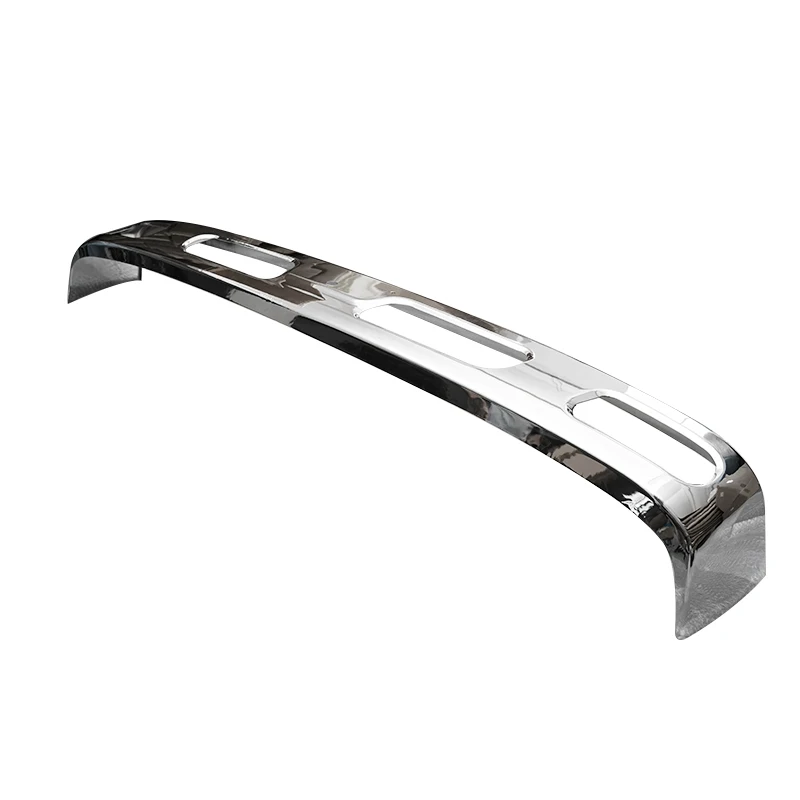
The durability advantage of aluminum truck bumpers extends far beyond basic protection, offering Fuso owners measurable benefits in terms of maintenance reduction, replacement intervals, and overall vehicle performance. Understanding these durability factors helps fleet managers and owner-operators make informed decisions about bumper selection that directly impact their bottom line and operational efficiency.
Material Science Behind Aluminum Bumper Durability
Aluminum Alloy Composition and Strength
Modern aluminum truck bumpers utilize high-strength aluminum alloys specifically engineered for automotive applications. These alloys typically combine aluminum with elements like magnesium, silicon, and copper to achieve superior mechanical properties. The resulting material offers excellent tensile strength while maintaining aluminum's inherent lightweight characteristics, making it ideal for Mitsubishi Fuso applications where payload capacity matters.
The crystalline structure of aluminum alloys provides exceptional fatigue resistance, allowing aluminum truck bumpers to withstand repeated stress cycles without developing cracks or structural weaknesses. This molecular-level durability translates into longer service life compared to traditional materials, particularly important for commercial vehicles that experience frequent loading and unloading operations.
Heat treatment processes further enhance the durability of aluminum truck bumpers by optimizing the grain structure and precipitation hardening. These manufacturing techniques create bumpers that maintain their structural integrity even under extreme temperature variations commonly encountered in commercial trucking operations.
Corrosion Resistance Mechanisms
The durability advantage of aluminum truck bumpers becomes particularly evident in their corrosion resistance properties. Aluminum naturally forms a protective oxide layer when exposed to oxygen, creating a barrier that prevents further oxidation and corrosion. This self-healing characteristic means that even minor scratches or surface damage on aluminum truck bumpers do not compromise long-term durability.
Unlike steel bumpers that require constant maintenance to prevent rust formation, aluminum truck bumpers maintain their structural integrity in harsh environments including salt exposure, chemical contact, and extreme weather conditions. This corrosion resistance directly contributes to extended service life and reduced replacement costs for Fuso operators.
The electrochemical properties of aluminum also provide galvanic protection when properly designed and installed. This additional layer of corrosion protection ensures that aluminum truck bumpers continue performing reliably throughout their operational lifespan, even in challenging environments where other materials might fail prematurely.
Impact Resistance and Energy Absorption
Collision Energy Management
The durability of aluminum truck bumpers in collision scenarios stems from their superior energy absorption characteristics. Aluminum's ductile properties allow controlled deformation that absorbs impact energy while protecting critical vehicle components. This controlled failure mechanism helps maintain the structural integrity of the Fuso chassis and cab during minor collisions or parking incidents.
Modern aluminum truck bumpers incorporate engineered crush zones and deformation patterns that optimize energy absorption. These design features ensure that impact forces are distributed across the bumper structure rather than concentrated at single points, reducing the likelihood of catastrophic failure and extending the usable life of the bumper system.
The elastic recovery properties of aluminum also contribute to bumper durability by allowing the material to return to its original shape after minor impacts. This characteristic means that aluminum truck bumpers can withstand numerous low-level impacts without permanent deformation, maintaining both appearance and functionality over extended service periods.
Fatigue Life and Stress Cycling
Commercial trucking subjects bumpers to continuous stress cycling from road vibrations, loading operations, and thermal expansion. Aluminum truck bumpers demonstrate exceptional fatigue life under these conditions due to their favorable stress-strain characteristics and crack propagation resistance. The material's ability to withstand millions of stress cycles without failure directly translates to extended service intervals.
The grain structure of properly manufactured aluminum truck bumpers resists crack initiation and propagation, key factors in long-term durability. Even when stress concentrations occur at mounting points or design transitions, aluminum's toughness prevents small defects from growing into structural failures that would compromise bumper performance.
Testing data consistently shows that aluminum truck bumpers maintain their mechanical properties throughout extended service lives, with minimal degradation in strength or impact resistance. This durability characteristic provides Fuso operators with predictable maintenance schedules and replacement intervals, supporting effective fleet management practices.
Environmental Durability Factors
Temperature Stability and Performance
The durability advantage of aluminum truck bumpers extends across wide temperature ranges commonly encountered in commercial transportation. Aluminum maintains its mechanical properties from extreme cold to elevated temperatures, ensuring consistent performance regardless of operating conditions. This temperature stability is particularly valuable for Fuso trucks operating in diverse climatic conditions or seasonal temperature variations.
Unlike materials that become brittle in cold weather or lose strength at high temperatures, aluminum truck bumpers provide reliable protection year-round. The material's thermal expansion characteristics also closely match those of modern truck chassis designs, reducing stress concentrations at mounting points and extending overall system durability.
Heat dissipation properties of aluminum contribute to bumper longevity by preventing heat buildup that could degrade material properties or protective coatings. This thermal management capability is especially important for Fuso trucks equipped with auxiliary equipment or operating in high-temperature environments where heat-related damage might affect other bumper materials.
Chemical and Environmental Resistance
Modern commercial trucking exposes bumpers to various chemicals including road salt, deicing agents, fuel spills, and cleaning solvents. Aluminum truck bumpers demonstrate superior resistance to these chemical exposures, maintaining their structural integrity and appearance even after prolonged contact with aggressive substances.
The natural passivation layer on aluminum surfaces provides chemical resistance that extends bumper life significantly compared to untreated metals. Additional protective coatings and treatments can further enhance this chemical resistance, creating aluminum truck bumpers that withstand even harsh industrial environments without degradation.
UV radiation resistance is another environmental durability factor where aluminum truck bumpers excel. The material's stability under ultraviolet exposure prevents degradation that affects both mechanical properties and appearance, ensuring that bumpers maintain their protective capabilities throughout extended outdoor service.
Weight-to-Strength Durability Benefits
Payload Efficiency and Structural Performance
The durability advantage of aluminum truck bumpers includes their exceptional strength-to-weight ratio, which directly impacts Fuso truck payload capacity and fuel efficiency. Lighter bumpers reduce overall vehicle weight without compromising protection, allowing operators to carry more cargo while maintaining the same level of front-end durability and safety performance.
This weight reduction also decreases stress on vehicle suspension and chassis components, contributing to overall vehicle durability and reduced maintenance requirements. Aluminum truck bumpers help optimize the entire vehicle system by reducing parasitic weight that would otherwise contribute to component wear and reduced operational efficiency.
The structural efficiency of aluminum allows bumper designers to create more robust protection systems without weight penalties. This design freedom enables aluminum truck bumpers to incorporate enhanced features like integrated towing points, auxiliary mounting provisions, and improved aerodynamics while maintaining superior durability characteristics.
Long-Term Cost Benefits
Durability translates directly into cost savings for Fuso operators through extended replacement intervals and reduced maintenance requirements. Aluminum truck bumpers typically provide service lives that exceed traditional materials by significant margins, reducing the frequency of bumper replacement and associated labor costs.
The corrosion resistance of aluminum truck bumpers eliminates the need for regular rust treatment and preventive maintenance that other materials require. This maintenance reduction represents substantial cost savings over the vehicle's operational life, particularly for high-mileage commercial applications where maintenance efficiency directly impacts profitability.
Fuel efficiency improvements from reduced vehicle weight provide ongoing operational savings that compound over the bumper's service life. These efficiency gains, combined with extended durability, create a compelling total cost of ownership advantage for aluminum truck bumpers in Fuso applications.
FAQ
How long do aluminum truck bumpers typically last on Mitsubishi Fuso trucks?
Aluminum truck bumpers on Fuso trucks typically provide 10-15 years of service life under normal commercial operations, significantly longer than steel alternatives. The exact lifespan depends on operating conditions, maintenance practices, and exposure to corrosive environments. Their corrosion resistance and fatigue properties contribute to this extended durability, making them a cost-effective long-term investment for fleet operators.
Do aluminum truck bumpers provide adequate protection compared to steel bumpers?
Yes, aluminum truck bumpers provide excellent protection through superior energy absorption and controlled deformation characteristics. While aluminum is lighter than steel, modern alloys and engineering design create bumpers that meet or exceed protection standards. The durability advantage comes from aluminum's ability to absorb impact energy efficiently while maintaining structural integrity over extended service periods.
Are aluminum truck bumpers more expensive initially but cheaper over time?
Aluminum truck bumpers typically have higher initial costs but provide superior total cost of ownership through extended service life, reduced maintenance requirements, and fuel savings from weight reduction. The durability advantage means fewer replacements over the vehicle's lifetime, while corrosion resistance eliminates ongoing maintenance costs associated with steel bumpers, making them economically advantageous for serious commercial operators.
Can aluminum truck bumpers be repaired if damaged, or must they be replaced?
Aluminum truck bumpers can often be repaired using specialized welding and forming techniques, though repair feasibility depends on damage severity and location. Minor dents and scratches can typically be addressed without compromising durability, while more significant damage may require replacement. The durability of properly repaired aluminum bumpers approaches that of new units when professional repair techniques are employed.
Table of Contents
- Material Science Behind Aluminum Bumper Durability
- Impact Resistance and Energy Absorption
- Environmental Durability Factors
- Weight-to-Strength Durability Benefits
-
FAQ
- How long do aluminum truck bumpers typically last on Mitsubishi Fuso trucks?
- Do aluminum truck bumpers provide adequate protection compared to steel bumpers?
- Are aluminum truck bumpers more expensive initially but cheaper over time?
- Can aluminum truck bumpers be repaired if damaged, or must they be replaced?